There is a pervasive and frankly irritating narrative doing the rounds in bioscience at the moment. You’ll hear it in conference talks, in grant planning discussions, and - perhaps most frustrating - in reviews written by people who have just enough exposure to transcriptomics to be dangerous, but not enough to actually understand what they’re recommending.
These days, many researchers treat bulk RNA-Seq like an ageing farm dog that everyone agrees has had a good run but is still hanging around because no one quite has the heart to reach for the 12-gauge and put it out to pasture. They’re wrong.
Aside from the ever-present instant experts that would have me reaching for the 12-gauge given half a chance, part of the reason that this perception persists is that we have seen genuine technological succession in the past.
RNA microarrays didn’t gradually fade out because of fashion or reviewer preference; they have all but disappeared because RNA-Seq is a fundamentally superior technology. Greater dynamic range, fewer assumptions about prior sequence knowledge, improved sensitivity, and a far more flexible analytical space. It wasn’t just new; it was better in almost every meaningful way. A clean replacement; like moving on from two sticks to a box of England’s Glory. Single-cell and spatial transcriptomics are not that.
Resolution Revolution
Without question, single-cell and spatial transcriptomics are extraordinary technological advances. The ability to deconvolute heterogeneous tissues, identify rare cell populations, and map transcriptional programmes back onto spatial context has fundamentally changed what is possible in molecular biology. That’s not hype, it’s real progress.
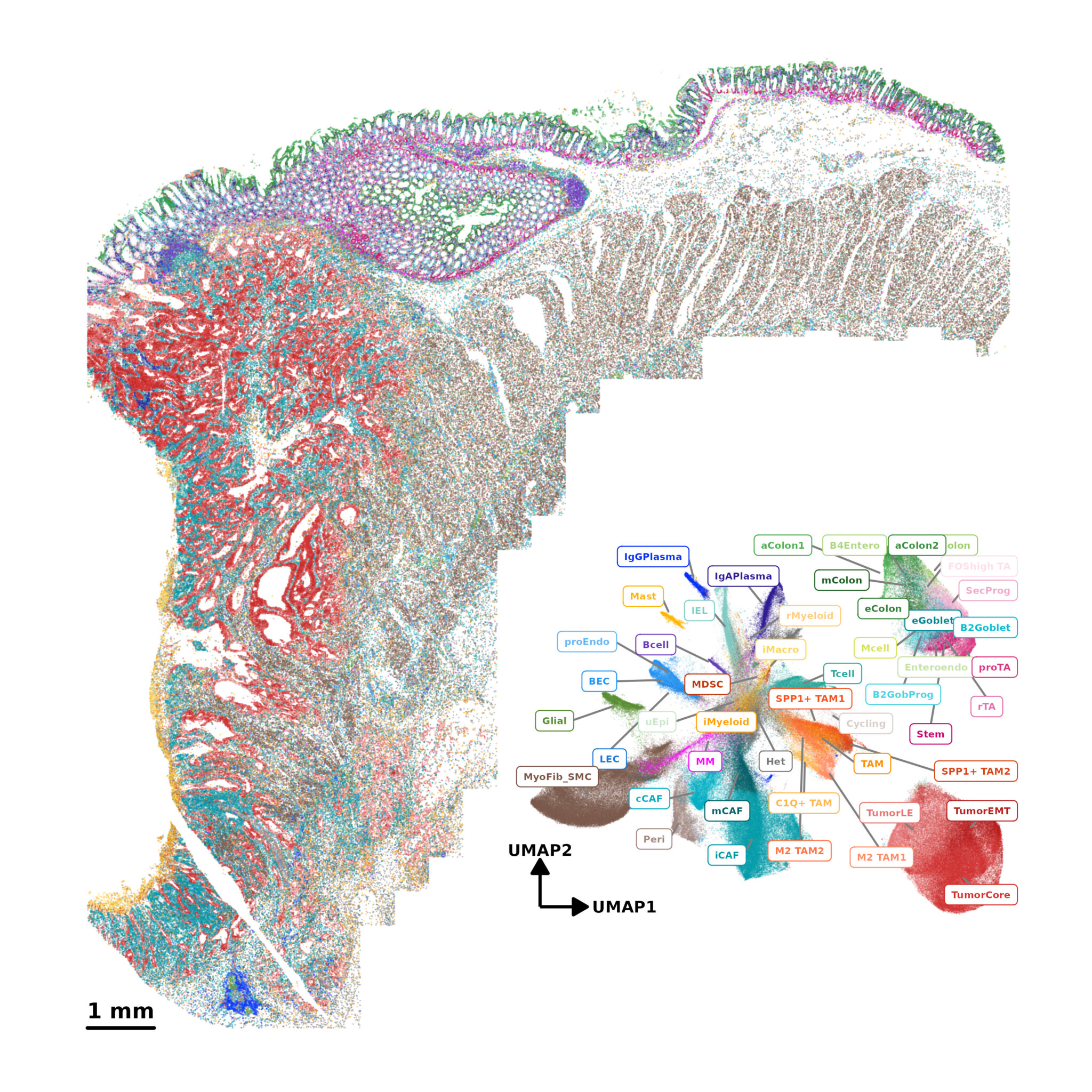 Undoubtedly sexier than a leather-clad Ferrari Testarossa…
But there’s a subtle shift that has happened alongside this progress, and it’s one that is worth interrogating. Cellular and spatial resolution have become conflated with superiority. The implicit assumption is that because these modalities are more granular in the cellular and tissue context, they must also be more informative, more rigorous, or more “correct”. And that’s simply not true.
Single-cell RNA-Seq resolves transcription at the level of individual cells. Spatial transcriptomics adds positional context. But neither of these inherently provides better molecular resolution than bulk RNA-Seq. In fact, for many questions, the opposite is true. Bulk RNA-Seq offers deeper, more stable, and more complete measurement of transcript abundance across an entire biological sample, without the sparsity and dropout that are intrinsic to single-cell and spatial data. These technologies are not higher-resolution versions of the same measurement, but different measurements entirely.
Cart Before The Horse
The following scenario, I would wager, will be familiar to a large proportion of people reading this:
Your bulk RNA-Seq study is well designed. The question is clearly defined. Batch and replication structure are sensible - the proposed experimental workflow is sound.
Reviewer 2: “Have you considered single-cell or spatial transcriptomics?” 🤬
The omics equivalent of recommending a sports car for a job that requires a box van.
These comments are frequently made by individuals who are not transcriptomics specialists yet have absorbed the idea that single-cell and spatial equals cutting-edge, and therefore must be preferable.
More expensive. Yes.
More complex. Yes.
But more appropriate?
The problem is that somewhere along the line the decision-making process has flipped. Instead of asking “what is the biological question?” and then selecting the appropriate modality, we increasingly see the technology being selected first - often based on novelty, perceived prestige, or reviewer expectation.
The question should dictate the technology - not the other way around. Understanding what each modality was designed to measure is the key to understanding when it should be used.
What Bulk Does Best
One of the most common criticisms levelled at bulk RNA-Seq is that it averages expression across millions of cells. That’s true. But averaging is not synonymous with information loss.
If your question concerns system-level changes, then the quantity you care about often is the overall shift in transcriptional activity. Not the behaviour of a single cell type, but the coordinated response of the system. To put it another way, the average isn’t masking the biology, it is the biology.
Equally, if your question concerns the transcriptional response of a known cell population, there is often no requirement to perform single-cell RNA-Seq at all. If that population can be reliably isolated (e.g., using fluorescence-activated cell sorting, magnetic bead enrichment, laser capture microdissection, or another such technique) bulk RNA-Seq of the purified population(s) will frequently provide deeper transcript coverage, greater statistical power, a less complex analytical workflow and a substantially lower cost. Single-cell RNA-Seq is invaluable for dissecting cellular heterogeneity; it is not always necessary for studying a cell population that has already been defined.
Bulk RNA-Seq also enables analyses that remain problematic using single-cell data. Differential transcript usage (DTU) and differential exon usage (DEU) are obvious examples. These analyses depend on accurate quantification of transcript and exon abundance, requiring consistent, high-coverage signal across transcripts and exons. That is inherently challenged by the transcript-end bias, sparsity, and dropout characteristics of current single-cell technologies. Although methods for DTU and DEU in single-cell data continue to emerge, they remain substantially more challenging because these characteristics reduce confidence in transcript-level estimates from the outset.
In discussions around transcriptomics, “resolution” has almost become shorthand for cellular resolution. But that’s only one dimension of resolution. Bulk RNA-Seq frequently provides greater molecular resolution than single-cell modalities through higher transcript coverage, greater sequencing depth, more reliable quantification of low-abundance transcripts, and improved statistical resolution through increased biological replication. That is, it scales to biologically meaningful sample sizes in a way that remains economically challenging for many single-cell and spatial studies, and that’s no small advantage when biological replication is one of the single greatest determinants of statistical power.
In addition, beyond conventional differential gene expression, transcript or exon useage, bulk RNA-Seq supports, alternative splice junction analyses, fusion transcript detection, allele-specific expression, RNA editing, co-expression network analysis, gene regulatory network inference, pathway and gene set analyses, variant calling in a pinch, and integration with complementary bulk omics modalities including proteomics, metabolomics and DNA methylation.
Perhaps the most beautifully ironic aspect of this entire discussion - and one of the strongest endorsements of bulk RNA-Seq’s underlying statistical framework - is that many single-cell differential expression workflows ultimately aggregate counts back to the sample level (pseudobulking) before applying methods such as edgeR, DESeq2, or limma-voom.

There is a reason many of the world’s leading bioinformatics centres still teach bulk RNA-Seq as the foundation of transcriptomics: the statistical principles and analytical methods developed around it are not simply a means of generating a volcano plot, they remain central to robust inference and among the most powerful approaches we have for understanding coordinated molecular responses at the level of biological systems. They remain just as relevant today as they were a decade ago.
And For The Questions Bulk Can’t Answer…
Reviewer #2 does, very occasionally, have a point. If your question concerns cellular heterogeneity, lineage relationships, cell-cell interactions, changes in cellular composition, or spatial organisation, then yes bulk RNA-Seq is absolutely the wrong tool.
Single-cell and spatial transcriptomics have fundamentally expanded the kinds of biological questions that transcriptomics can answer. If your question is not “which genes changed?” but “which cells changed?”, “which cell populations are interacting?”, or “where in the tissue is this biology occurring?”, bulk RNA-Seq will obscure precisely the variation you are trying to understand.
Single-cell RNA-Seq allows you to identify previously unknown cellular subpopulations, distinguish rare cell types that would otherwise disappear into an average signal, reconstruct differentiation and developmental trajectories, and determine whether an observed transcriptional change is driven by genuine cellular reprogramming or simply by changes in cellular composition. Those are profoundly different biological questions. For example, your bulk workflow might have showed inflammatory genes differentially up-regulated, but a single-cell experiment might instead reveal that actually macrophage gene expression didn’t change at all, there were simply twice as many macrophages.
Spatial transcriptomics extends this even further by preserving tissue architecture. It allows you to ask not only what different cell populations are doing, but where they are doing it. Which immune cells infiltrate the tumour margin? Which fibroblasts neighbour malignant epithelial cells? Which signalling pathways appear active between adjacent populations? Once tissue has been dissociated for bulk RNA-Seq or indeed single-cell, that information has gone forever. No amount of sequencing depth can recover biological information that was never retained in the first place.
Single-cell and spatial are not improved versions of bulk RNA-Seq. They are different analytical dimensions altogether. Cellular identity, cellular composition, developmental trajectory, spatial organisation, and intercellular communication are not questions that bulk RNA-Seq was ever designed to answer. They are precisely the questions that single-cell and spatial transcriptomics were developed to address.
If all of this sounds like I might have switched to arguing that single-cell and spatial transcriptomics are the obvious future of transcriptomics, let me assure you that I’m not about to indulge in the exact methodological absolutism that I’ve spent the last few thousand words complaining about. Every technology has trade-offs.
The extraordinary resolution offered by single-cell and spatial transcriptomics comes at a cost. They are more expensive, generate substantially larger and more complex datasets, and demand considerably greater computational resources and analytical expertise. In return, they provide biological insights that bulk RNA-Seq simply cannot.
That additional analytical power comes with additional statistical responsibility. Single-cell RNA-Seq experiments still require careful biological replication, thoughtful experimental design, and appropriate statistical analysis. Thousands of cells obtained from a single biological sample are not thousands of biological replicates1, which is precisely why modern differential expression workflows frequently pseudobulk counts back to the sample level before applying statistical frameworks originally developed for bulk RNA-Seq.
Spatial transcriptomics introduces another dimension of experimental design because the tissue section itself effectively becomes a covariate. Every slice through a tissue captures a slightly different biological reality. Even adjacent sections differ in cellular composition, morphology, and microenvironment. Sectioning order, timing and processing can all introduce unwanted variation that sits on top of the biology you are actually trying to measure. Higher-dimensional data rarely make experiments simpler; they usually introduce additional dimensions of potential confounding, making good experimental design even more important.
1 Thousands of cells from a single donor are not one thousand biological replicates - they remain a single biological replicate. Treating cells as though they were independent observations is pseudoreplication, and pseudoreplication has been producing misleading statistical confidence in biological experiments since long before single-cell sequencing existed.
Horses for Courses
Single-cell and spatial transcriptomics are not higher-resolution versions of bulk RNA-Seq. They are different measurements designed to answer different biological questions.
Cellular resolution belongs to single-cell RNA-Seq. Spatial resolution belongs to spatial transcriptomics. Molecular resolution often belongs to bulk RNA-Seq. Statistical resolution frequently does too.
This is not an argument against single-cell or spatial transcriptomics. Quite the opposite. They have transformed transcriptomics by allowing us to ask questions that bulk RNA-Seq never could. It is, however, an argument against technological determinism.
Bulk RNA-Seq, single-cell RNA-Seq, and spatial transcriptomics each occupy distinct analytical niches. They answer different questions, operate under different experimental constraints, and require different analytical frameworks. Treating one as universally superior to the others is not only incorrect but actively encourages poor experimental design and ultimately poorer scientific thinking.
Understanding transcriptomics has never been about learning the newest method but about learning which method best answers the biological question you are trying to ask.
Perhaps reports of bulk RNA-Seq’s impending demise have been somewhat exaggerated.
Thanks for reading. I hope you enjoyed the article and that it helps you to get a job done more quickly or inspires you to further your data science journey. Please do let me know if there’s anything you want me to cover in future posts.
If this tutorial has helped you, consider supporting the blog on Ko-fi!
Happy Data Analysis!
Disclaimer: All views expressed on this site are exclusively my own and do not represent the opinions of any entity whatsoever with which I have been, am now or will be affiliated.